







Testosterone Therapy for Low T
Using WHOOP 4.0 to Optimize Your Testosterone Levels and Heart Rate Variability.

Testosterone Therapy for Low T
Using WHOOP 4.0 to Optimize Your Testosterone Levels and Heart Rate Variability.
The best way to find out if you have low testosterone is to see a board-certified urologist, an expert in diagnosing low testosterone and in testosterone replacement therapy. At REGENX Health, every patient meets with a urologist.
You can also take the ADAM (Androgen Deficiency in the Aging Male) questionnaire, a short set of questions about your symptoms. It can help you understand whether low testosterone may be a concern before you have lab testing. The ADAM questionnaire is a screening tool and cannot diagnose low testosterone on its own. A diagnosis can only be confirmed through lab testing and an evaluation by your doctor.
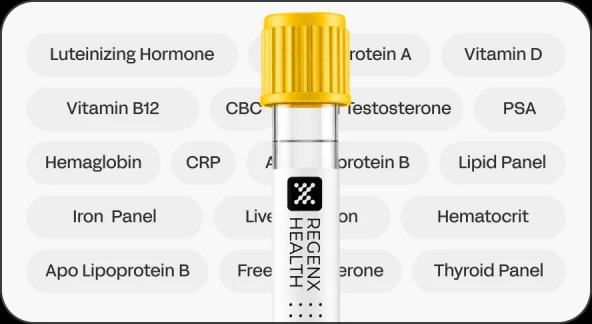
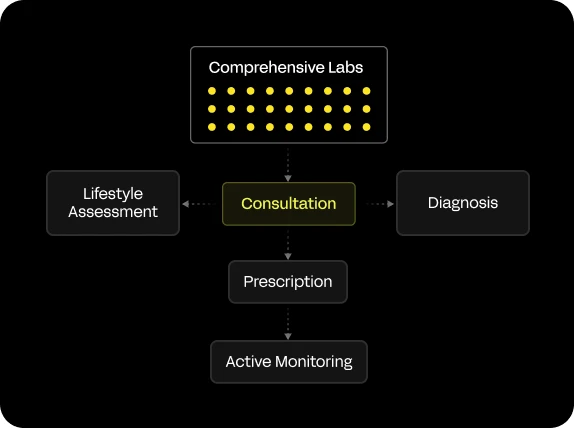
Diagnosing low testosterone starts with lab testing. From there, your urologist looks beyond your testosterone level to understand why it is low. Your symptoms matter too, because many common symptoms can look like low testosterone even when something else is the cause.
During your visit, your REGENX Health urologist also checks other lab values to make sure your symptoms are not caused by something else, such as a low thyroid level or an electrolyte imbalance. We look at your overall health, so you receive the right treatment for the right condition. While testosterone is our primary focus, our goal is to optimize your overall health and support your long-term well-being.
You can have your labs drawn at Quest Diagnostics on the same day you sign up, depending on appointment availability at Quest locations near you.
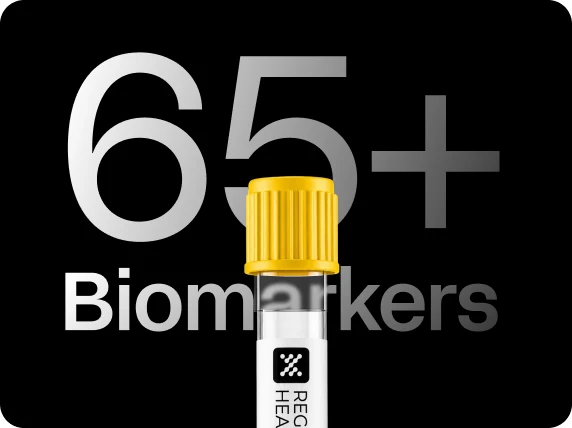
Labs ordered through REGENX Health are drawn at Quest Diagnostics locations using a venous blood draw, which is the standard of care for lab testing. A venous draw also allows a much wider range of tests and gives more complete information than an at-home blood spot test.
There is no single number that defines low testosterone for all men. The American Urological Association (AUA) recommends a total testosterone level below 300 ng/dL as a reasonable cut-off to support a diagnosis of low testosterone. However, this number does not adjust for age, and testosterone levels naturally differ between a man in his 30s and a man in his 70s. At REGENX Health, your urologist considers your age and symptoms while following AUA guidelines and recommendations.
Yes, in most cases we can use labs from these providers or other online lab companies, but we need to review them before your consultation to make sure they are complete and how they were performed ie. blood draw or home blod spot. Our review makes sure your labs meet the standard of care for patients considering TRT, peptides, or weight loss.
Diagnosing low testosterone starts with lab testing. From there, your urologist looks beyond your testosterone level to understand why it is low. Your symptoms matter too, because many common symptoms can look like low testosterone even when something else is the cause.
During your visit, your REGENX Health urologist also checks other lab values to make sure your symptoms are not caused by something else, such as a low thyroid level or an electrolyte imbalance. We look at your overall health, take an in-depth medical history, and carefully evaluate your symptoms and what you are trying to achieve. This helps us set clear expectations and make sure you receive the right treatment for the right condition. While testosterone is our primary focus, our goal is to optimize your overall health and support your long-term well-being.
Labs from Quest take on average one to two days to return. Your doctor will personally follow up the labs and text you when they are completed to schedule your visit. Certain laboratory markers can take longer to return particularly IGF-1 and free testosterone measurements.
No. Your lab work is included in your program and your initial consultation fee. If you’d like more specialized testing that isn’t part of your program, we can arrange it for a small additional fee, and only with your approval.
Yes, in many cases. If your labs were done within the last 90 days, you can send a copy to your doctor to review before your consultation. As a courtesy, we will check your results to see whether they are complete. If your doctor needs more labs to make a working diagnosis and confirm standards of care, we will tell you which ones are needed and why, so we can schedule them. This review is not a consultation, and we will not go over your results with you at this stage. It only identifies what is missing, so your doctor has what they need to make a sound decision about your care.
For example, if you provide only a serum total testosterone level, your doctor will explain how low testosterone is diagnosed under the standard of care and which additional labs are needed and why.
We ask all patients to send us any recent lab results. We compare them with the labs done through REGENX Health to establish a trend and track changes over time
A valid driver license. Your doctor will also give you a Quest lab form to bring as a backup. No payment is necessary when you go to Quest.
We recommend having your labs done in the morning, ideally before 11 a.m.
Yes. Because your labs include a lipid panel, we request that you are fast labs are drawn. Water or black coffee is fine before your lab test.