






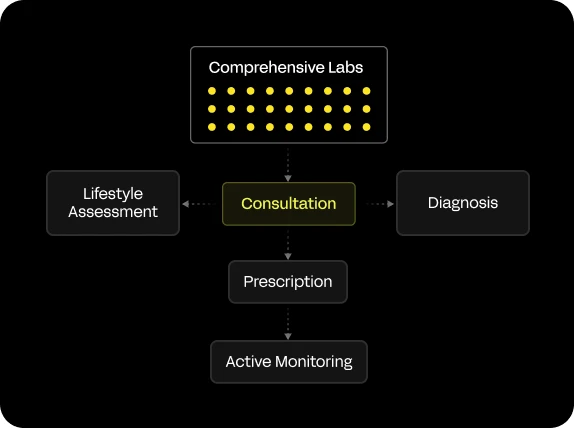





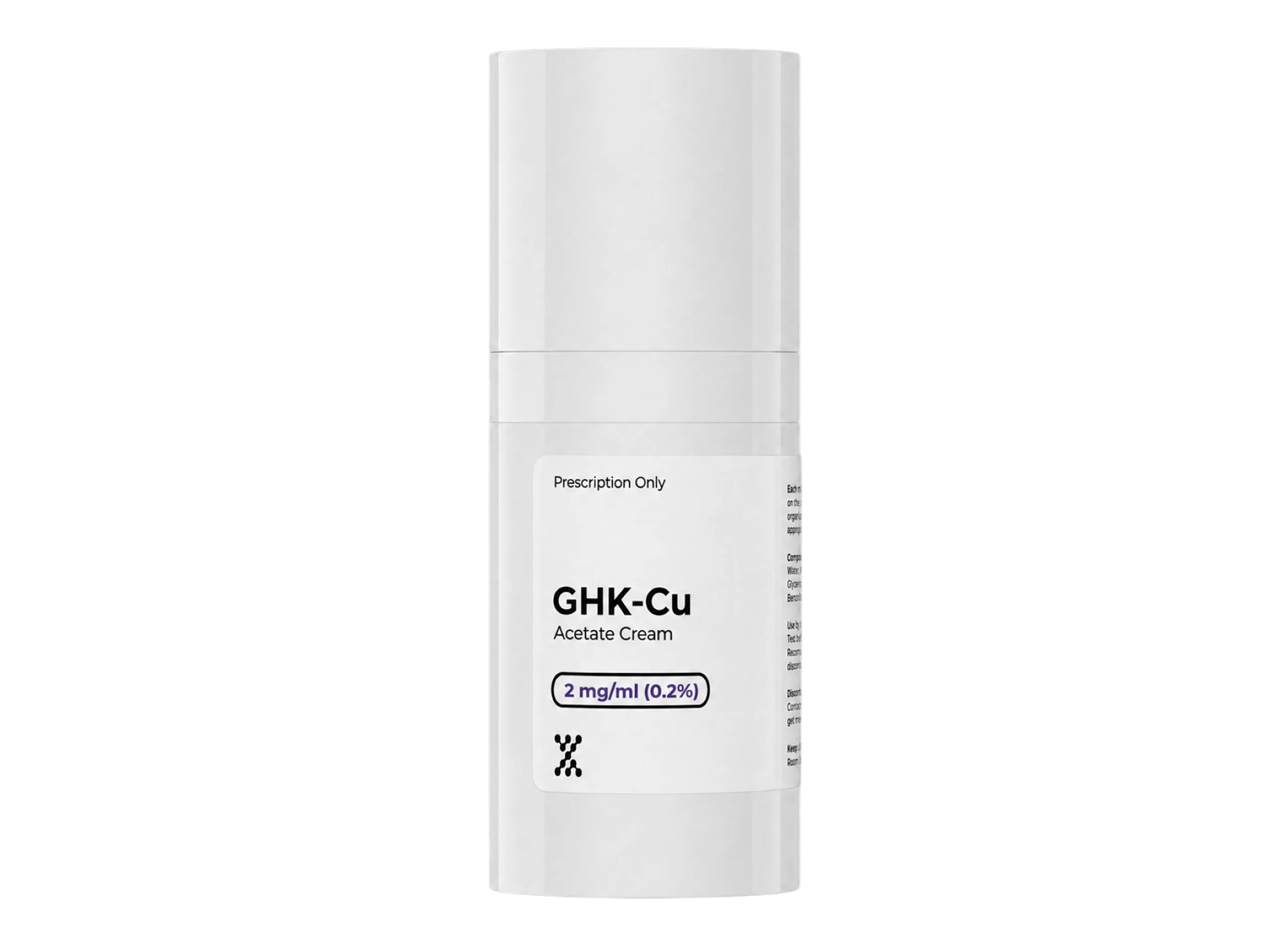
GHK-Cu is a naturally occurring copper-binding tripeptide. It plays a central role in tissue repair, collagen and elastin synthesis, and the regulation of cellular regeneration. GHK-Cu levels in the body decline significantly with age. A decline in GHK-Cu correlates with slower wound healing, reduced skin quality, and diminished tissue repair capacity. GHK-Cu therapy restores these levels through direct supplementation, activating the biological pathways that drive skin regeneration, follicle health, and systemic repair. At REGENX Health, GHK-Cu is prescribed by a board-certified urologist as part of a lab-guided protocol tailored to each patient's health profile and goals.
Benefits of GHK-Cu Copper Peptide
GHK-Cu supports a broad range of physiological functions by restoring the copper peptide levels that activate collagen synthesis, skin repair, and tissue regeneration. Preclinical and clinical research indicate that GHK-Cu peptide has favorable effects on age-related skin changes, wound healing, hair follicle health, and systemic inflammation, with a well-tolerated safety profile.
- Increased collagen and elastin production for firmer, denser skin
- Reduction in fine lines, wrinkle depth, and visible signs of photoaging
- Accelerated wound healing and skin tissue repair
- Stimulation of hair follicle growth and support for hair density
- Antioxidant and anti-inflammatory effects at the cellular level
- Activation of dermal fibroblasts to support structural skin repair
- Improved skin hydration, elasticity, and overall skin quality
- Support for systemic tissue regeneration, including connective tissue and vascular health
GHK-Cu Dosage and Formulations
REGENX Health offers the GHK-Cu copper peptide in multiple formulations to accommodate different treatment goals, dosing preferences, and patient lifestyles. Your board-certified urologist selects the formulation and dosage based on your lab results and clinical profile.
GHK-Cu Capsule (2mg and 5mg)
Oral capsule for daily systemic dosing. Suitable for patients seeking a straightforward daily protocol for ongoing GHK-Cu support. Capsules provide systemic delivery and are the simplest formulation to integrate into a daily routine.
GHK-Cu Topical Cream (2mg/mL, 30mL)
Applied directly to the skin twice daily as directed. The topical cream formulation delivers GHK-Cu directly to the target tissue, making it well-suited for patients focused on localized skin repair, anti-aging, or wound healing at a specific site. The cream supports collagen production and skin regeneration at the application site.
GHK-Cu Subcutaneous Injection
Administered at home using a small insulin-type needle into the fatty tissue of the abdomen or thigh. Subcutaneous GHK-Cu injections provide systemic delivery and bypass first-pass hepatic metabolism, improving bioavailability and onset compared to oral dosing. Injectable GHK-Cu is the most direct and potent formulation available for systemic tissue repair and hair follicle support.
Risks and Side Effects of GHK-Cu
GHK-Cu is generally well-tolerated with a limited side effect profile based on current clinical evidence. As a naturally occurring peptide that declines with age, supplementation is designed to restore physiological levels rather than introduce a foreign compound. However, as with any therapeutic intervention, there are potential side effects and considerations your urologist will review before prescribing.
Possible Side Effects:
- Headache or dizziness, particularly during initial dosing
- Mild fatigue following injection or early in the protocol
- Temporary nail discoloration (bluish tint) due to copper ion activity, which is benign and resolves with dose adjustment
- Flushing or mild redness at the injection site with subcutaneous administration
- Signs of low blood pressure in rare cases, including lightheadedness or nausea; contact your physician if these occur
Important Considerations:
- GHK-Cu is contraindicated in patients with known copper allergy; disclose any metal sensitivities to your urologist before starting
- GHK-Cu is not appropriate for use during pregnancy or breastfeeding due to insufficient safety data in these populations
- Long-term human clinical data for systemic GHK-Cu supplementation is still evolving; REGENX Health monitors all patients through regular lab work and follow-up visits.
How Do You Take GHK-Cu
The method of GHK-Cu administration depends on your treatment goals, schedule, and your urologist's recommendation.
Subcutaneous Injection
Administered at home using a small insulin-type needle into the fatty tissue of the abdomen or thigh. Subcutaneous GHK-Cu injections are typically dosed daily or on a cycle prescribed by your urologist. Best taken in the morning to align with the body's natural repair and regeneration cycles. Injections can be taken on an empty stomach or with food.
Oral Capsule
Taken daily with water, ideally in the morning or at bedtime as directed. Oral GHK-Cu is suitable for systemic maintenance protocols or for patients who prefer not to inject. The capsule formulation allows for straightforward daily dosing with no reconstitution required.
Topical Cream
Applied to the target area twice daily as directed. The topical cream is designed for localized skin repair, anti-aging treatment, or site-specific wound support. Apply a thin layer to clean, dry skin and allow to absorb before applying other products. Can be used morning and evening.
Best Time of Day
For injections and capsules, morning dosing is generally preferred to take advantage of the body's peak repair activity during the day. Topical cream can be applied morning and evening. Your urologist will provide specific timing guidance based on your formulation and protocol.
Who Can Use GHK-Cu
- Men and women experiencing visible signs of skin aging, including fine lines, wrinkles, loss of skin density, or reduced skin elasticity
- Patients looking for physician-supervised copper peptide support for skin repair and collagen production beyond what topical cosmetic products can provide
- Men and women experiencing hair thinning or reduced hair density who want a biologically targeted approach to follicle support
- Patients recovering from skin procedures, wounds, or tissue damage who want to support accelerated healing
- Men on TRT or peptide therapy who want to add GHK-Cu for synergistic anti-aging and tissue repair support
- Active men and women looking to support skin and connective tissue health alongside a performance-focused protocol
- Patients interested in a physician-supervised GHK-Cu protocol rather than over-the-counter copper peptide serums
Who Should Not Take GHK-Cu
- Patients with a known allergy to copper or copper-containing compounds; copper allergy is a contraindication for GHK-Cu therapy
- Women who are pregnant or breastfeeding; insufficient safety data exists for GHK-Cu supplementation during pregnancy or lactation
- Patients with Wilson's disease or other conditions involving impaired copper metabolism; excess copper may worsen these conditions
- Patients with active malignancy should discuss GHK-Cu therapy with their physician before starting, as the peptide influences cell proliferation pathways
- Anyone not under the supervision of a licensed physician for GHK-Cu therapy
What Do You Need to Monitor on GHK-Cu Therapy
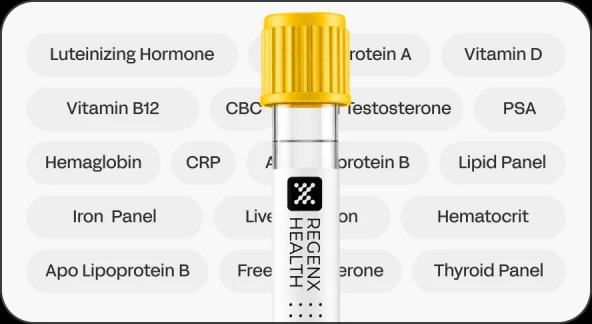
GHK-Cu therapy at REGENX Health includes lab monitoring to track your response and ensure safety. Key markers your urologist will review:
- Serum copper levels to confirm that GHK-Cu is within therapeutic range and avoid copper accumulation over time
- Liver function tests (ALT, AST) as copper is hepatically processed and enzyme elevation should be monitored with ongoing supplementation
- Complete blood count (CBC) for baseline health tracking
- Ceruloplasmin levels if there is any clinical concern about copper metabolism
- IGF-1 levels if GHK-Cu is stacked with growth hormone peptides such as Sermorelin or CJC-1295
Clinical Research on GHK-Cu
The following research supports the clinical rationale for GHK-Cu therapy. All studies are reviewed for relevance by the REGENX Health clinical team.
- GHK Peptide as a Natural Modulator of Multiple Cellular Pathways in Skin Regeneration (Pickart, Vasquez-Soltero, Margolina, 2015). Comprehensive review of GHK-Cu's mechanisms in skin regeneration. Documents that GHK-Cu increases collagen production in 70% of subjects treated, outperforming vitamin C cream (50%) and retinoic acid (40%), and that a GHK-Cu facial cream applied for 12 weeks to 71 women with photoaging improved skin density, thickness, fine lines, and wrinkle depth. Published in BioMed Research International.
- Regenerative and Protective Actions of the GHK-Cu Peptide in the Light of the New Gene Data (Pickart and Margolina, 2018). Reviews the broad regenerative activity of GHK-Cu across tissue types, demonstrating stimulation of collagen, elastin, and glycosaminoglycan synthesis, support for dermal fibroblast function, and hair follicle growth. Documents that GHK-Cu activates over 4,000 human genes associated with tissue repair and remodeling. Published in the International Journal of Molecular Sciences.
- Effects of GHK-Cu on MMP and TIMP Expression, Collagen and Elastin Production and Facial Wrinkle Parameters (Badenhorst et al., 2016). Randomized double-blind clinical trial in 40 female subjects aged 40 to 65. Twice-daily application of GHK-Cu in a lipid-based nano-carrier over 8 weeks significantly increased collagen and elastin production by dermal fibroblasts compared to controls. GHK-Cu outperformed Matrixyl 3000 on key markers of skin matrix remodeling. Published in the Journal of Aging Science.
- Enhanced healing of ulcers in patients with diabetes by topical treatment with glycyl-L-histidyl-L-lysine copper (Mulder et al., 1994). Clinical study of GHK-Cu in diabetic wound healing. Wound closure rate was three times faster with GHK-Cu treatment compared to standard care. Ulcer infection incidence was significantly lower in the GHK-Cu group (7%) versus vehicle (34%, p less than 0.05). Published in Wound Repair and Regeneration.
- Thermodynamically stable ionic liquid microemulsions pioneer pathways for topical delivery and peptide application (Wang et al., 2023). Preclinical study demonstrating GHK-Cu's mechanism for hair follicle growth. GHK-Cu promoted hair follicle entry into the growth phase in as few as 6 days, outperforming minoxidil (9 days) in animal models. Mechanisms identified include stimulation of VEGF and HGF expression, improved scalp microcirculation, and activation of the Wnt/beta-catenin hair growth signaling pathway. Published in PubMed Central.
Frequently Asked Questions About GHK-Cu Acetate Cream
What is GHK-Cu?
GHK-Cu is a naturally occurring copper-binding tripeptide found in human plasma, saliva, and urine. It plays a central role in tissue repair, collagen synthesis, and cellular regeneration. GHK-Cu levels decline significantly with age, and supplementation through injections, oral capsules, or topical cream can help restore them to support skin health, wound healing, and overall tissue repair.
What are the benefits of copper peptide GHK-Cu?
GHK-Cu copper peptide benefits include increased collagen and elastin production, improved skin density and firmness, reduction in fine lines and wrinkle depth, accelerated wound healing, support for hair follicle growth and thickness, antioxidant and anti-inflammatory effects, and activation of dermal fibroblasts. Clinical studies have demonstrated measurable improvements in photoaged skin and diabetic wound closure with GHK-Cu treatment.
How are GHK-Cu injections administered?
GHK-Cu injections are administered subcutaneously at home using a small insulin-type needle into the fatty tissue of the abdomen or thigh. At REGENX Health, your board-certified urologist recommends the dose and protocol based on your lab results, treatment goals, and whether GHK-Cu is being used as a standalone therapy or added with other treatments.
What is the GHK-Cu dosage?
GHK-Cu dosage varies by formulation and patient goals. Oral capsules are available in 2mg and 5mg strengths for daily systemic dosing. The topical cream is available at 2mg/mL in a 30mL preparation, applied twice daily to the target area. Injectable GHK-Cu dosing is determined by your urologist based on your protocol. All dosing at REGENX Health is guided by your clinical profile and adjusted based on your response over time.
What are the side effects of GHK-Cu?
GHK-Cu side effects are generally mild. The most commonly reported effects include headache, dizziness, mild fatigue, and temporary bluish nail discoloration caused by copper ion activity. Injection site flushing may occur with subcutaneous administration. Rare cases of low blood pressure symptoms have been reported. GHK-Cu is contraindicated in patients with copper allergy or Wilson's disease. REGENX Health monitors all patients through lab work to ensure safety.
Can GHK-Cu help with hair growth?
Yes. GHK-Cu for hair growth is one of the better-supported applications of this peptide. Research demonstrates that GHK-Cu stimulates hair follicle activity by elevating vascular endothelial growth factor (VEGF) and hepatocyte growth factor (HGF), improving blood supply to the scalp, activating the Wnt/beta-catenin hair growth pathway, and prolonging the anagen (active growth) phase of the hair cycle.
Can GHK-Cu be combined with TRT or peptide therapy?
Yes. GHK-Cu is commonly used alongside testosterone replacement therapy and growth hormone peptides at REGENX Health. GHK-Cu supports skin and connective tissue repair, complementing the muscle-building and recovery benefits of TRT and the GH-optimization effects of peptides like Sermorelin or CJC-1295. Your urologist manages each component independently based on lab data and treatment goals.
Is GHK-Cu better than retinol or vitamin C for skin?
Clinical research comparing topical GHK-Cu to vitamin C cream and retinoic acid found that GHK-Cu increased collagen production in 70% of subjects, compared to 50% for vitamin C and 40% for retinoic acid. Unlike retinol, GHK-Cu does not cause skin irritation, purging, or photosensitivity. It works by activating the body's own repair mechanisms rather than introducing exogenous acids, making it suitable for a broader range of patients including those with sensitive skin.
Is GHK-Cu therapy safe?
Current clinical evidence indicates that GHK-Cu has a favorable safety profile when used under physician supervision at therapeutic doses. It is a naturally occurring compound that the body produces on its own, making supplementation well tolerated in most patients. The primary contraindications are copper allergy and pregnancy.
Where can I get GHK-Cu therapy near me?
REGENX Health provides GHK-Cu therapy online to patients across the United States. Your consultation, lab review, and prescription are all managed through secure telehealth with a board-certified urologist. Medications are shipped directly to your door. There is no need to visit a physical clinic for GHK-Cu injections, capsules, or topical cream protocols.