











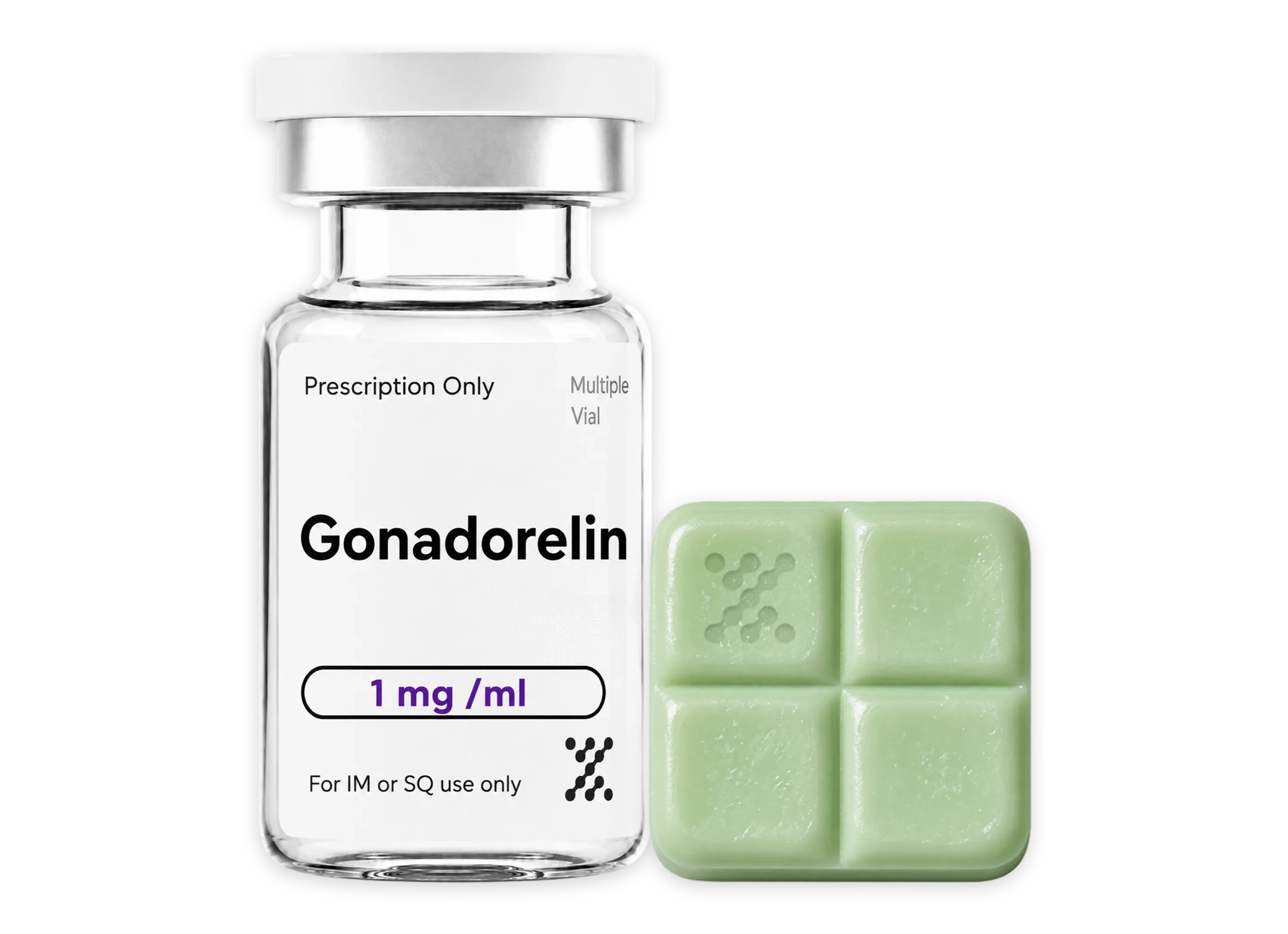
Gonadorelin acetate is a synthetic form of gonadotropin-releasing hormone (GnRH), the signaling molecule your hypothalamus uses to trigger the pituitary gland to release luteinizing hormone (LH) and follicle-stimulating hormone (FSH). When administered via subcutaneous injection, gonadorelin reactivates the hypothalamic-pituitary-gonadal (HPG) axis, preserving the body's natural hormone signaling pathway rather than bypassing it entirely. For men on testosterone replacement therapy (TRT), this matters because exogenous testosterone suppresses endogenous LH and FSH, which causes testicular atrophy and shuts down sperm production. At REGENX Health, gonadorelin acetate for men is prescribed by a board-certified urologist as part of a lab-guided TRT protocol designed to maintain testicular function and hormonal balance.
Benefits of Gonadorelin Acetate
Gonadorelin acts upstream of HCG by directly stimulating the pituitary, rather than mimicking LH at the receptor level. Clinical evidence shows that pulsatile GnRH therapy reliably induces androgen production and spermatogenesis in men with hypogonadotropic hypogonadism, and its physiologic mechanism carries several advantages over direct gonadotropin replacement.
- Stimulates natural LH and FSH release from the pituitary
- Supports testicular function and volume during TRT
- Maintains the HPG axis signaling pathway
- Supports sperm production alongside testosterone therapy
- Lower estrogenic impact compared to HCG
- Reduces risk of LH receptor desensitization over time
- Preserves fertility options for men on long-term TRT
- Compatible with enclomiphene, HCG, and peptide stacks
Gonadorelin Acetate Dosage and Formulations
REGENX Health offers gonadorelin acetate in formulations selected to match each patient's TRT protocol and clinical goals. Your board-certified urologist determines dosing and frequency based on your lab panel, fertility objectives, and response to therapy.
Gonadorelin Acetate Injectable (Subcutaneous Vial)
The primary delivery method for gonadorelin, administered as a subcutaneous injection multiple times per week. Frequency is individualized by your urologist based on LH, FSH, and testosterone response. This formulation works best in men who require consistent pituitary stimulation while on TRT.
Gonadorelin Acetate Troche
Gonadorelin Acetate Troche 500mcg is a convenient oral form of synthetic GnRH (gonadotropin-releasing hormone) that stimulates the pituitary gland to release LH (luteinizing hormone) and FSH (follicle-stimulating hormone), supporting natural testosterone production while helping to preserve fertility and testicular function.
Risks and Side Effects of Gonadorelin Acetate
Gonadorelin is generally well tolerated when prescribed and monitored appropriately. Studies report no serious adverse events in men undergoing pulsatile GnRH therapy, with most side effects being mild, transient, and related to injection site or hormonal fluctuations.
Possible Side Effects
- Injection site reactions (redness, itching, or mild swelling)
- Temporary increases in testosterone or estrogen levels
- Breast tenderness if estrogen rises above the desired range
- Sensation of increased testicular fullness or sensitivity
- Rare allergic or hypersensitivity reactions
Important Considerations
- Gonadorelin has a very short half-life (2 to 4 minutes), so dosing frequency and timing matter significantly. Inconsistent administration reduces effectiveness.
- Long-term data specific to gonadorelin in TRT protocols is still emerging. Most published clinical evidence involves men with hypogonadotropic hypogonadism using pulsatile pump delivery.
- Hormone levels (LH, FSH, testosterone, estradiol) should be monitored regularly. Dose adjustments may be needed if levels trend outside the target range.
How Do You Take Gonadorelin Acetate
Subcutaneous Injectable
Gonadorelin injectable is administered subcutaneously using a small insulin-type syringe. Common injection sites include the abdomen (2 to 3 inches from the navel), upper thigh, or outer arm. Frequency is typically 2 to 3 injections per week, though some protocols call for more frequent dosing to better mimic the pulsatile GnRH secretion pattern. Injections can be given at any time of day, though consistency in timing is preferred. Rotate injection sites with each dose to minimize local tissue reactions.
Combination Troche
The combination troche is placed between the cheek and gum and allowed to dissolve fully, typically over 15 to 20 minutes. It's taken once daily, usually in the morning or as directed by your urologist. Avoid eating, drinking, or rinsing your mouth for at least 15 minutes before and after administration to allow adequate mucosal absorption. The troche does not need to be swallowed.
Who Can Use Gonadorelin Acetate
- Men on TRT who want to preserve testicular volume and maintain natural HPG axis signaling
- Men on TRT with fertility goals who want to support both LH and FSH production
- Men who prefer a lower estrogenic impact compared to HCG
- Younger men on TRT who may want to discontinue therapy in the future and restore natural function
- Men who have experienced declining response to HCG or want to avoid LH receptor desensitization
- Men on TRT who want to stack gonadorelin with peptides or enclomiphene as part of a comprehensive hormonal protocol
Who Should Not Take Gonadorelin Acetate
- Men with a documented hypersensitivity or allergic reaction to gonadorelin or any of its excipients
- Men with pituitary gland dysfunction or damage that prevents a normal LH/FSH response to GnRH stimulation
- Men with active hormone-sensitive cancers, including prostate cancer, where androgen stimulation is contraindicated
- Men seeking primary fertility treatment without concurrent TRT, where HCG combined with FSH may be more clinically appropriate
- Anyone not under the supervision of a licensed physician for hormonal therapy
What Do You Need to Monitor on Gonadorelin Acetate
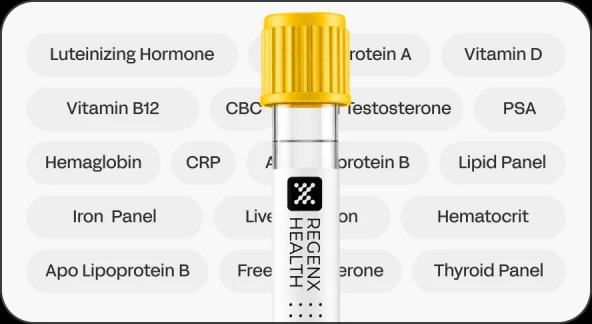
REGENX Health uses lab monitoring at every stage of Gonadorelin therapy to track pituitary response, hormone balance, and overall safety. Your board-certified urologist reviews these markers and adjusts dosing based on results.
- LH and FSH: The primary response markers to gonadorelin. Both should rise appropriately after initiation, confirming pituitary stimulation.
- Total and free testosterone: Monitored to ensure TRT dosing remains on target and gonadorelin is not causing excessive androgen fluctuations.
- Estradiol (E2): Gonadorelin can modestly increase estrogen via aromatization. Monitoring estradiol helps prevent gynecomastia or other estrogenic effects.
- Testicular volume: Assessed clinically at follow-up visits to confirm that testicular preservation goals are being met.
- CBC (complete blood count): Baseline health tracking and monitoring for any hematologic changes associated with androgen therapy.
- Semen analysis: For men with active fertility goals, periodic semen analysis confirms sperm production and quality over the course of therapy.
Clinical Research on Gonadorelin Acetate
The following research supports the clinical rationale for Gonadorelin acetate. All studies are reviewed for relevance by the REGENX Health clinical team.
- Predictors of outcome of long-term GnRH therapy in men with idiopathic hypogonadotropic hypogonadism (Pitteloud et al., 2002). Study of 76 men showing pulsatile GnRH therapy reliably induced androgen production and spermatogenesis, with prior pubertal development as the strongest positive predictor of response.
- The Pulsatile Gonadorelin Pump Induces Earlier Spermatogenesis Than Cyclical Gonadotropin Therapy in Congenital Hypogonadotropic Hypogonadism Men (Wu et al., 2019). Comparative trial finding that pulsatile gonadorelin produced spermatogenesis a median 8 months earlier than HCG/HMG therapy, with 90% of gonadorelin-treated men achieving spermatogenesis.
- Pulsatile gonadotropin releasing hormone therapy for spermatogenesis in congenital hypogonadotropic hypogonadism patients who had poor response to combined gonadotropin therapy (Li et al., 2024). Of 28 men who failed HCG/HMG therapy, switching to pulsatile GnRH achieved spermatogenesis in 60.7%, with testicular volume increasing significantly. No serious adverse events occurred.
- Pulsatile GnRH Is Superior to hCG in Therapeutic Efficacy in Adolescent Boys With Hypogonadotropic Hypogonadism (Han et al., 2015). Trial comparing GnRH pump versus HCG in 34 male patients, finding GnRH-treated patients achieved larger testicular volumes, with comparable testosterone levels and no significant difference in side effects.
- Comparison of pulsatile subcutaneous gonadotropin-releasing hormone and exogenous gonadotropins in the treatment of men with isolated hypogonadotropic hypogonadism (Schopohl et al., 1991). Eight-man study showing that after maximal results with HCG/HMG, switching to pulsatile GnRH therapy resulted in 53% further increase in testicular size over 18 months.
Frequently Asked Questions About Gonadorelin Acetate
What is Gonadorelin acetate?
Gonadorelin acetate is a synthetic form of gonadotropin-releasing hormone (GnRH), the natural signaling molecule produced in the hypothalamus. When injected subcutaneously, it binds to GnRH receptors on the pituitary gland, triggering the release of luteinizing hormone (LH) and follicle-stimulating hormone (FSH). These gonadotropins then stimulate the testicles to produce testosterone and support sperm production. It's the upstream approach to maintaining testicular function, working through the body's own hormonal communication system.
What are the benefits of Gonadorelin for men?
Gonadorelin acetate benefits for men on TRT include preservation of testicular volume, support for natural LH and FSH production, maintenance of sperm production, and a lower estrogenic impact compared to HCG. Because it stimulates FSH (which HCG doesn't), Gonadorelin is particularly useful for men with active fertility goals. It also reduces the risk of LH receptor desensitization that can develop with long-term HCG use at higher doses.
How is Gonadorelin acetate administered?
At REGENX Health, Gonadorelin acetate is primarily administered as a subcutaneous injection, typically 2 to 3 times per week depending on your protocol. It can also be prescribed as a combination troche for buccal absorption. Because gonadorelin has a very short half-life (2 to 4 minutes), consistent and frequent dosing is important for maintaining effective pituitary stimulation. Your urologist will determine the right frequency based on your lab results and treatment goals.
What are the side effects of Gonadorelin?
Gonadorelin side effects are generally mild and manageable. The most common are injection site reactions such as redness, itching, or minor swelling. Some men experience a temporary increase in testosterone or estrogen, which can occasionally cause breast tenderness. A sensation of increased testicular fullness or sensitivity is also reported by some patients. Serious adverse effects are rare when therapy is properly dosed and monitored through lab work.
How does Gonadorelin compare to HCG?
Gonadorelin and HCG serve similar goals, but they work differently. HCG mimics LH directly at the testicular receptor and has a long half-life (about 36 hours), making it convenient with twice-weekly injections. Gonadorelin works upstream at the pituitary, stimulating both LH and FSH, and has a much shorter half-life that requires more frequent dosing. Gonadorelin typically produces fewer estrogenic effects, stimulates FSH for spermatogenesis, and avoids LH receptor desensitization over time. For men with active fertility concerns, gonadorelin may be preferred. For men prioritizing simplicity and cost, HCG remains a proven option.
Can Gonadorelin be combined with TRT or peptides?
Yes. Gonadorelin is specifically designed to be used alongside TRT, not instead of it. It preserves the HPG axis signaling while exogenous testosterone handles androgen replacement. It's commonly stacked with Anastrozole (aromatase inhibitor) to manage any estrogen rise and with Enclomiphene as part of a more comprehensive fertility-supportive protocol. Some patients also add Gonadorelin with growth hormone peptides like Sermorelin or CJC-1295/Ipamorelin as part of a broader optimization protocol. Your urologist at REGENX Health will design the stack based on your labs and goals.
How long does Gonadorelin take to work?
LH and FSH response to Gonadorelin can be measured within the first few weeks of starting therapy. Testicular volume response and changes in sperm parameters typically become measurable over 2 to 4 months. Men using Gonadorelin for fertility support should plan for 6 to 12 months of consistent therapy before expecting meaningful improvements in sperm counts. Results vary based on your baseline gonadal function, TRT protocol, and dosing frequency.
Do I need a prescription for Gonadorelin?
Yes. Gonadorelin acetate is a prescription medication. At REGENX Health, your Gonadorelin prescription is written by a board-certified urologist following a full medical evaluation that includes a review of your labs, symptoms, and treatment goals. This ensures your protocol is clinically appropriate and properly monitored. Purchasing Gonadorelin without a prescription from unregulated online sources is illegal and carries significant safety risks.
Where can I get Gonadorelin acetate near me?
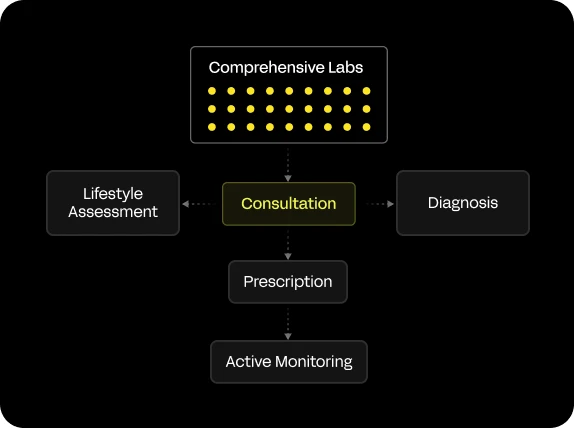
REGENX Health provides Gonadorelin acetate prescriptions through secure online telehealth across the United States. You don't need to visit a clinic. Your consultation with a board-certified urologist, lab review, and prescription management are all handled remotely. Medications are dispensed through a licensed compounding pharmacy and shipped directly to your home. If you're searching for Gonadorelin acetate near me, the REGENX Health telehealth model gives you physician-supervised access from anywhere.
What does Gonadorelin acetate cost?
Gonadorelin acetate is generally more affordable than brand-name HCG. Pricing varies by pharmacy and formulation. At REGENX Health, your prescription cost is discussed transparently during your consultation. There are no hidden fees. Your monthly program includes physician oversight, lab work, and medication shipping with no surprise charges.
Is Gonadorelin the same as a Gonadorelin peptide?
Gonadorelin is a peptide, specifically a decapeptide, that mimics the body's naturally occurring GnRH. The terms Gonadorelin and Gonadorelin peptide are often used interchangeably in clinical and patient-facing contexts. Gonadorelin acetate is the pharmaceutical-grade salt form used in compounded injectable products and combination troches. It's bioidentical to the GnRH your hypothalamus produces and works through the same receptor mechanism.