












Human chorionic gonadotropin (HCG) is a hormone that mimics luteinizing hormone (LH), the signal the brain sends to the testicles to produce testosterone and sperm. When men use exogenous testosterone, LH secretion is reduced , which causes intratesticular testosterone to drop by as much as 94%, leading to testicular atrophy and impaired sperm production. HCG steps in as an LH substitute, keeping the testicles active even while TRT suppresses the body's natural signaling. At REGENX Health, HCG for men is prescribed as part of a lab-guided protocol by a board-certified urologist who specializes in testosterone replacement and male reproductive health.
Benefits of HCG for Men
HCG's primary role in men is to maintain testicular function by replacing the LH signal that exogenous testosterone suppresses. Clinical evidence shows that low-dose HCG co-administered with TRT preserves intratesticular testosterone and spermatogenesis, making it a critical tool for men who want the benefits of TRT without sacrificing fertility or testicular health.
- Preserves fertility and sperm production while on TRT
- Maintains testicular size and prevents atrophy
- Restores intratesticular testosterone suppressed by TRT
- Supports natural testosterone production as a standalone therapy
- Helps recover spermatogenesis after stopping TRT or AAS
- FDA-approved for hypogonadotropic hypogonadism in males
- Reduces side effects associated with TRT-induced LH suppression
HCG Dosage and Formulations
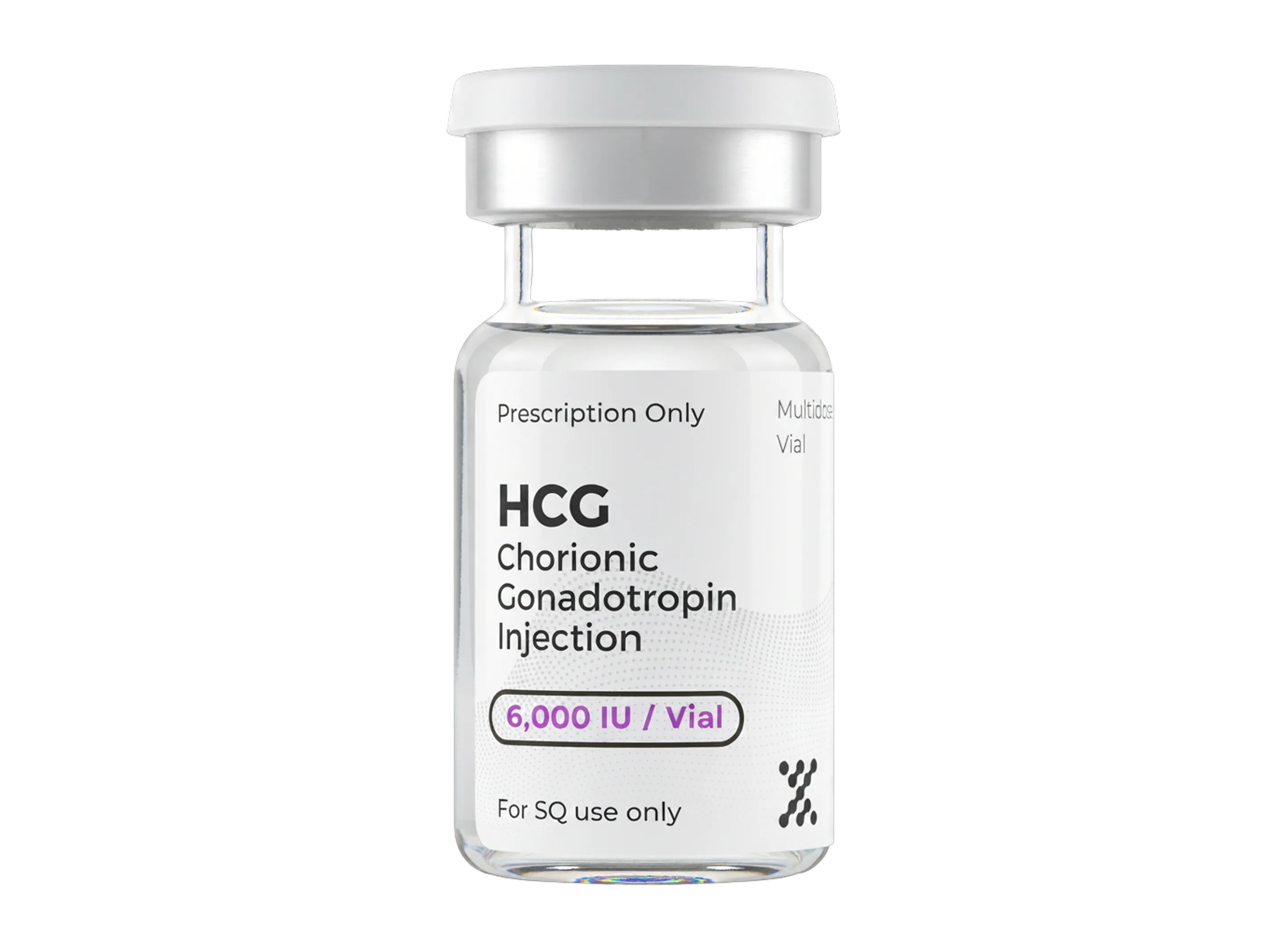
REGENX Health offers HCG as a lyophilized (freeze-dried) injectable that is reconstituted with bacteriostatic water before use. Your board-certified urologist selects the dosing protocol based on your labs, TRT regimen, and fertility goals.
HCG Injectable Vial (Lyophilized)
Reconstituted subcutaneous injection. This is the standard form used for all clinical HCG protocols at REGENX Health. Dosing is individualized and commonly administered every other day for men on TRT who want to preserve fertility and testicular volume. Higher doses (1,500 to 3,000 IU) are used for spermatogenesis recovery protocols after stopping TRT in specific cases.
Risks and Side Effects of HCG
HCG is generally well-tolerated at the doses used in men's health, but it does stimulate testosterone and estrogen production, which means hormonal side effects are possible if estradiol rises unchecked. REGENX Health monitors estradiol and testosterone alongside HCG therapy to catch and manage any imbalances early.
Possible Side Effects
- Gynecomastia or breast tenderness from elevated estradiol
- Injection site pain, redness, or swelling
- Headache or mood changes
- Fluid retention or edema at higher doses
- Acne secondary to androgen stimulation
Important Considerations
- Long-term data on high-dose HCG monotherapy in men is limited; protocols should be physician-supervised.
- HCG can raise estradiol significantly; routine estradiol monitoring is required and an aromatase inhibitor may be needed.
- HCG is contraindicated in men with androgen-dependent tumors, including prostate carcinoma.
How Do You Take HCG
Subcutaneous Injection
HCG is administered as a subcutaneous injection, typically into the abdomen or thigh. The lyophilized powder is reconstituted with bacteriostatic water before use, and the solution is drawn into an insulin syringe for injection. Your REGENX Health physician reviews sterile reconstitution technique and injection protocol during your consultation.
Frequency: Every other day (most common), or 2 to 3 times per week depending on protocol.
Timing: Time of day is flexible. Consistency matters more than the specific hour. Refrigerate reconstituted HCG and discard after the beyond-use date provided.
Practical tips: Do not shake the vial after mixing. Rotate injection sites. Inspect for particulates before injecting. Never inject cloudy or discolored solution.
Who Can Use HCG
- Men on TRT who want to preserve fertility and maintain sperm production
- Men on TRT experiencing testicular atrophy who want to maintain testicular volume
- Men with hypogonadotropic hypogonadism who need LH replacement to stimulate natural testosterone production
- Men coming off TRT or anabolic androgenic steroids (AAS) who need to restore spermatogenesis
- Men with low testosterone who want to avoid full TRT suppression and prefer a fertility-preserving approach
- Men already on TRT at REGENX Health who want to add HCG to their existing protocol for testicular support
Who Should Not Take HCG
- Men with prostate carcinoma or other androgen-dependent tumors
- Men with a documented prior allergic reaction to HCG
- Men with precocious puberty (premature puberty, typically before age 9 in boys)
- Anyone not under the supervision of a licensed physician; HCG is a prescription medication and should never be self-administered without medical oversight
What Do You Need to Monitor on HCG
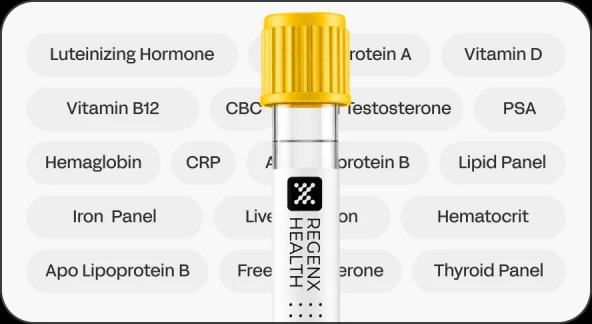
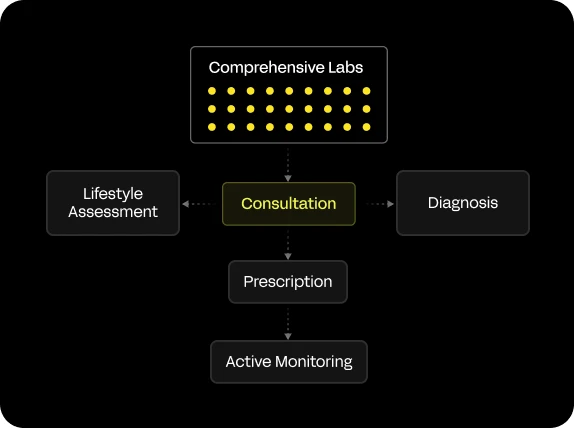
REGENX Health uses a lab-guided approach: all HCG protocols are monitored with baseline and follow-up bloodwork to ensure hormonal balance and safety throughout treatment.
- Total Testosterone: Confirms HCG is achieving the desired stimulatory effect on testicular production
- Estradiol (E2): HCG increases estrogen alongside testosterone; unchecked estradiol causes gynecomastia and libido issues
- LH and FSH: Useful at baseline to classify hypogonadism type; suppressed on TRT, these guide HCG dosing decisions
- Semen Analysis: Required for men using HCG for fertility preservation;
- CBC (Complete Blood Count): Monitors for erythrocytosis, particularly in men using HCG alongside TRT
- PSA (Prostate-Specific Antigen): Baseline and periodic monitoring required given androgen stimulation
Clinical Research on HCG
The following research supports the clinical rationale for HCG for men. All studies are reviewed for relevance by the REGENX Health clinical team.
- Low-Dose Human Chorionic Gonadotropin Maintains Intratesticular Testosterone in Normal Men with Testosterone-Induced Gonadotropin Suppression (Coviello et al., 2005). In a randomized controlled study of 29 men, 250 IU of HCG every other day kept intratesticular testosterone within 7% of baseline during full TRT-induced LH suppression.
- Concomitant Intramuscular Human Chorionic Gonadotropin Preserves Spermatogenesis in Men Undergoing Testosterone Replacement Therapy (Hsieh et al., 2013). Low-dose HCG (500 IU every other day) combined with TRT maintained semen parameters in hypogonadal men over a mean follow-up of 6.2 months.
- Indications for the Use of Human Chorionic Gonadotropin for the Management of Infertility in Hypogonadal Men (Wenker et al., 2018). Comprehensive review of HCG protocols in men with hypogonadism, including TRT co-administration, post-cycle spermatogenesis recovery, and AAS-induced hypogonadism.
- Optimal Restoration of Spermatogenesis After Testosterone Therapy Using HCG and FSH (Stocks et al., 2024). In 77 men with testosterone-induced infertility, 74% showed improved sperm concentration on HCG/FSH reboot therapy; concurrent TRT did not impair recovery.
- Understanding and Managing the Suppression of Spermatogenesis Caused by TRT and Anabolic-Androgenic Steroids (Rodriguez et al., 2022). Detailed review of HCG's mechanism as an LH receptor agonist and its role in restoring intratesticular testosterone and spermatogenesis in hypogonadal men.
Frequently Asked Questions About HCG (Lyo)
What is HCG?
HCG stands for human chorionic gonadotropin. It's a hormone that mimics luteinizing hormone (LH), the signal from the brain that tells the testicles to produce testosterone and sperm. In men's health, it's primarily used alongside testosterone replacement therapy to prevent the testicular suppression that TRT causes. It's also FDA-approved as a standalone treatment for certain types of hypogonadism, specifically hypogonadotropic hypogonadism, where the problem originates in the pituitary rather than the testicles.
What are the benefits of HCG for men?
The main benefits are fertility preservation and testicular health maintenance. When you take exogenous testosterone, your pituitary stops sending LH to the testicles, which causes intratesticular testosterone to decrease and sperm production to cease. HCG replaces that LH signal, keeping sperm production active and preventing testicular atrophy. It can also be used as a standalone therapy to stimulate the testicles to produce more testosterone in men with secondary hypogonadism.
How is HCG administered?
HCG is given as a subcutaneous injection. The medication comes as a lyophilized (freeze-dried) powder that you reconstitute with bacteriostatic water before injecting. Most men inject into the abdomen using a small insulin syringe. Your REGENX Health physician will walk you through the reconstitution process and proper injection technique during your initial consultation. Reconstituted HCG should be stored in the refrigerator and used within the prescribed beyond-use window.
What are the side effects of HCG?
The most common side effect is elevated estradiol, which can cause gynecomastia (breast tissue growth) or breast tenderness if left unmanaged. HCG stimulates testosterone production, and some of that testosterone converts to estrogen. Other possible side effects include injection site reactions, headaches, acne, and fluid retention at higher doses. REGENX Health monitors estradiol regularly on all HCG protocols and can prescribe an aromatase inhibitor if estrogen climbs too high.
Can HCG be combined with TRT?
Yes, and this is actually one of its most common uses. Men on TRT who want to preserve their fertility or maintain testicular volume are typically prescribed HCG alongside their testosterone. Clinical studies show that every other day dosing is enough to maintain intratesticular testosterone close to pre-TRT levels, which supports continued sperm production. REGENX Health routinely co-prescribes HCG with testosterone protocols for men in their reproductive years or those concerned about testicular atrophy.
How long does HCG take to work?
HCG starts acting quickly on the Leydig cells of the testicles, often within days. However, meaningful improvements in semen parameters take longer since sperm maturation takes approximately 74 days. Most men undergoing spermatogenesis recovery protocols are assessed with a semen analysis prior to starting HCG therapy and during therapy. For men using HCG to prevent atrophy on TRT, testicular volume can be maintained from the start of co-administration.
Do I need a prescription for HCG?
Yes. HCG is a prescription medication in the United States. You can't legally obtain it without a prescription from a licensed physician. At REGENX Health, a board-certified urologist evaluates your labs and health history, then prescribes and manages your HCG protocol. Compounded HCG is prescribed for specific patient needs where commercially available formulations aren't appropriate.
Where can I get HCG for men near me?
REGENX Health is a telemedicine men's health practice. You don't need to visit a clinic. Your consultation is conducted via secure video with a board-certified urologist, your labs are done at a location convenient to you, and your HCG is shipped discreetly to your home or office. If you've been searching for HCG near you, ordering HCG online through REGENX Health gives you physician-supervised care without a waiting room.
What does HCG cost?
HCG injections cost varies depending on dose and protocol length. At REGENX Health, your monthly investment is all-inclusive: it covers your physician consultation, medication, supplies, delivery, and lab work. There are no hidden fees. The HCG cost is bundled into a straightforward monthly plan, and there are no long-term commitments. Contact REGENX Health for current pricing based on your specific protocol.
Is HCG used in post-cycle therapy (PCT)?
Yes. Men coming off TRT or anabolic androgenic steroids (AAS) often use HCG as part of a post-cycle therapy protocol to restart natural testosterone and sperm production. Higher pulse doses (1,500 to 3,000 IU) given every other day for several weeks are typically used in this context to stimulate the testis. HCG is often combined with SERMs like clomiphene or enclomiphene in PCT protocols, depending on the individual's recovery goals and baseline labs.
Is HCG the same as human chorionic gonadotropin?
Yes, HCG is the abbreviation for human chorionic gonadotropin. It's the same compound. In the context of men's health, human chorionic gonadotropin for men is used to mimic LH, maintain intratesticular testosterone, and support fertility during or after TRT. It's different from the products historically marketed for weight loss, which are not supported by evidence and are not the same medical use.