












L-Carnitine is an amino acid derivative that plays a central role in fatty acid oxidation, shuttling long-chain fatty acids into the mitochondria where they're burned for energy. Unlike the OTC capsules at the supplement shop, prescribed injectable L-Carnitine delivers far higher bioavailability, making it a meaningful option for men dealing with fatigue, stubborn body fat, and declining energy despite optimized testosterone. At REGENX Health, injectable L-Carnitine is prescribed and overseen by a board-certified urologist as part of a broader men's health protocol.
Benefits of Injectable L-Carnitine
The evidence on L-Carnitine benefits is substantial. A meta-analysis of 37 randomized controlled trials found that L-Carnitine supplementation significantly reduced body weight, BMI, and fat mass, especially in adults carrying excess weight. Injectable delivery gives you the systemic concentrations that oral dosing often can't match.
- Supports fat oxidation and l-carnitine fat loss
- Improves energy production at the cellular level
- Reduces exercise-related fatigue and speeds recovery
- Enhances endurance and aerobic capacity
- Supports mood, libido, and sexual function in aging men
- May improve testosterone signaling and androgen receptor sensitivity
- Reduces markers of oxidative stress and cellular damage
- Supports cardiovascular health and blood flow
L-Carnitine Dosage and Formulations
REGENX Health prescribes injectable L-Carnitine in a sterile compounded formulation, with dosage selected by your board-certified urologist based on labs, goals, and how you're responding to your current protocol.
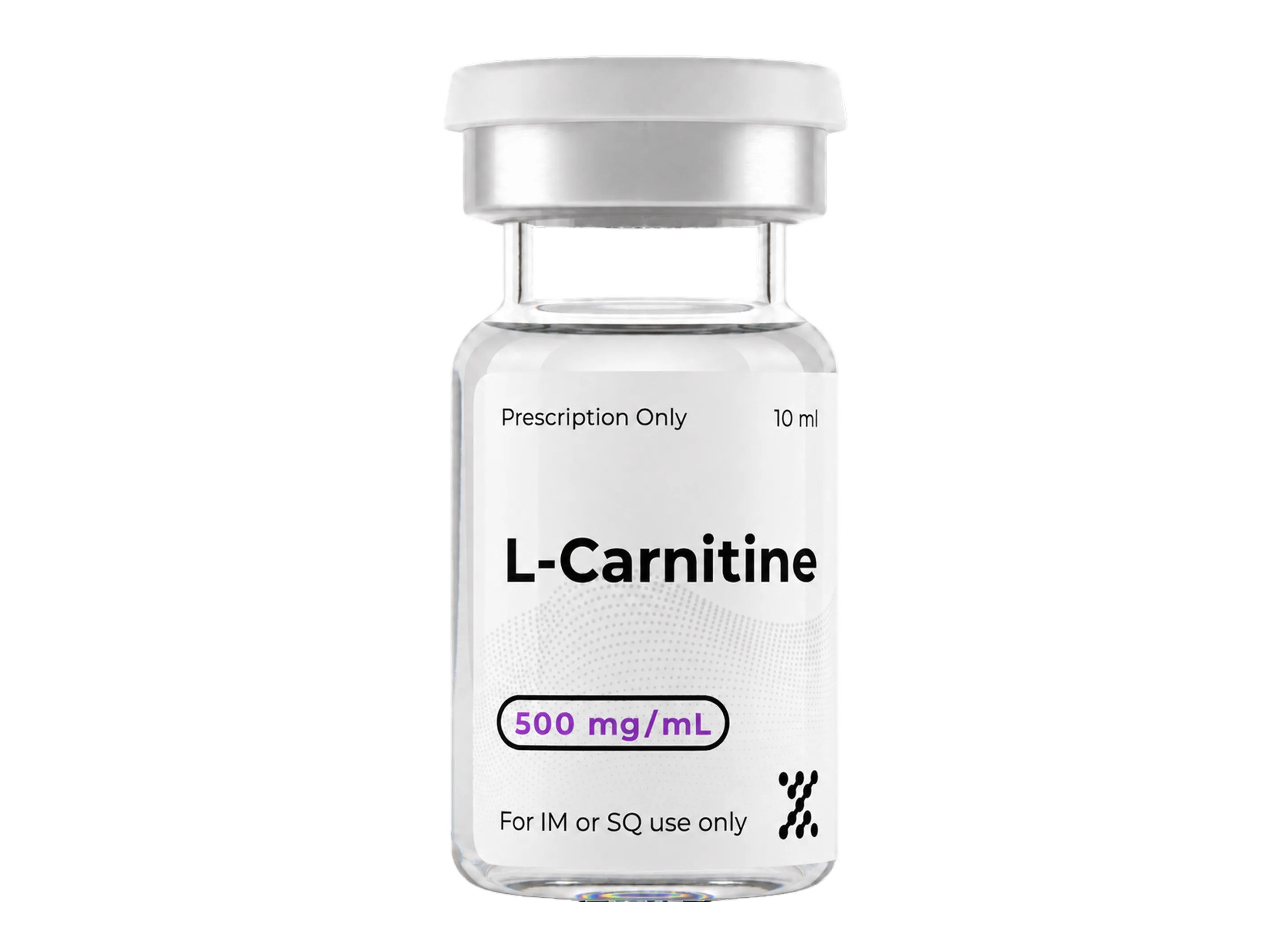
L-Carnitine 500 mg/mL Sterile Solution (10 mL Vial)
This is a compounded injectable L-Carnitine solution for subcutaneous or intramuscular administration. It's used to support fat metabolism, energy production, and recovery in men on TRT or performance optimization protocols. At 500 mg/mL, it delivers a clinically meaningful dose without requiring large injection volumes.
Risks and Side Effects of L-Carnitine
Injectable L-Carnitine has a well-established safety profile across decades of clinical use. A systematic review in the Journal of the International Society of Sports Nutrition found L-Carnitine supplementation to be well tolerated in healthy subjects at doses ranging from 1 to 4 grams per day, with no serious adverse events reported in included trials.
Possible Side Effects
- Mild injection site discomfort or redness
- Nausea, especially when first starting
- Fishy body odor (more common with high-dose oral; less so injectable)
- GI upset at higher doses
- Headache in some individuals
Important Considerations
- Long-term injectable use in otherwise healthy men hasn't been studied extensively; monitoring is advised
- Men with seizure disorders should use with caution: some case reports link carnitine to lowered seizure threshold
- Kidney disease can affect carnitine metabolism; dose adjustments may be needed
How Do You Take an L-Carnitine Injection
Subcutaneous Injection
Inject into the subcutaneous fat layer, typically the abdomen or outer thigh. Rotate injection sites to avoid tissue buildup. Administer 2-3 times per week, or per your urologist's protocol. Timing around your workout (30-60 minutes pre-exercise) can enhance fat oxidation during training.
Intramuscular Injection
Some protocols call for intramuscular delivery into the glute or lateral thigh. IM delivery tends to have a faster absorption curve. Administered 1-3 times per week depending on dosing schedule.
Practical Tips
- Draw up with an 18g needle, inject with a 25g or 27g needle for SubQ
- Warm the vial in your hand briefly if the solution feels thick
- No food restriction required around injection time
- Refrigerate the vial after opening; use within the compounded expiry window
Who Can Use an L-Carnitine Prescription
- Men experiencing persistent fatigue or low energy despite normal testosterone levels
- Men on TRT who want to support fat loss and body composition during their protocol
- Men with stubborn visceral fat who've plateaued on diet and exercise alone
- Men looking to improve exercise endurance, recovery, and aerobic output
- Men experiencing age-related decline in libido, mood, or sexual function
- Men pairing L-Carnitine with peptide therapy (GHRPs, Sermorelin) for enhanced metabolic results
Who Should Not Take Injectable L-Carnitine
- Men with active seizure disorders or a known history of carnitine-related neurological sensitivity
- Men with stage 4-5 chronic kidney disease without direct nephrology oversight
- Anyone with a known allergy to carnitine or any component of the compounded formulation
- Men not currently under the care of a licensed physician who can monitor response and adjust dosing
- Men with hypothyroidism should exercise caution, as carnitine may reduce thyroid hormone action at the receptor level
What Do You Need to Monitor on L-Carnitine
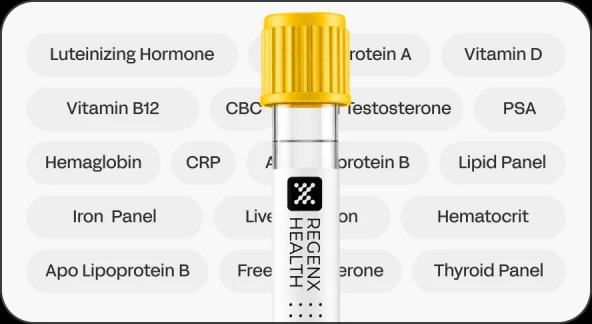
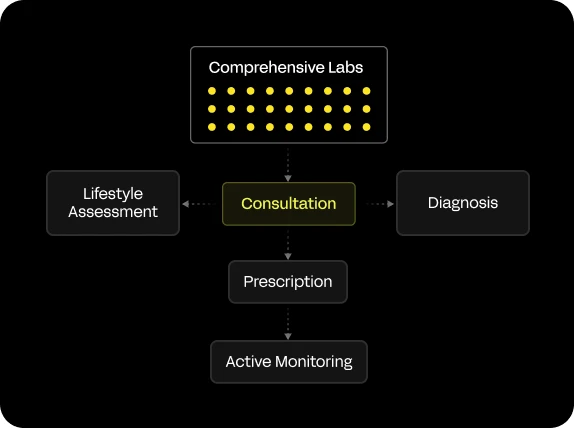
At REGENX Health, every prescription is lab-guided. Your urologist monitors the markers below to ensure L-Carnitine is working and that your broader protocol stays dialed in.
- Comprehensive Metabolic Panel (CMP): liver enzymes (ALT, AST) and kidney function (creatinine, BUN)
- Fasting glucose and insulin: to assess metabolic response and insulin sensitivity over time
- Lipid panel (total cholesterol, LDL, HDL, triglycerides): fat metabolism marker
- Total and free testosterone: especially when stacking with TRT
- IGF-1: if l-carnitine is being used alongside peptide therapy (Sermorelin, CJC-1295/Ipamorelin)
- CBC (complete blood count): general health baseline and to rule out anemia-related fatigue
Clinical Research on L-Carnitine
The following research supports the clinical rationale for l-carnitine. All studies are reviewed for relevance by the REGENX Health clinical team.
- L-Carnitine Supplementation on Weight Loss: A Systematic Review and Meta-Analysis of 37 RCTs (Talenezhad et al., 2020): A meta-analysis of 37 randomized controlled trials found l-carnitine significantly reduced body weight, BMI, and fat mass, with the strongest effects in adults with overweight or obesity.
- Carnitine versus Androgen Administration in the Treatment of Sexual Dysfunction and Fatigue Associated with Male Aging (Cavallini et al., 2004): In a 6-month RCT of 120 men, l-carnitine (propionyl + acetyl forms) significantly improved erectile function, libido, mood, and fatigue scores, with results comparable to testosterone therapy and without prostate enlargement side effects.
- Clinical Effects of L-Carnitine on Physical Performance in Healthy Subjects: A Systematic Review and Meta-Analysis (Vecchio et al., 2021): A systematic review of 30 publications found that l-carnitine supplementation improved strength, endurance, and exercise capacity, while also delaying the onset of fatigue.
- The Effects of L-Carnitine L-Tartrate Supplementation on Hormonal Responses to Resistance Exercise and Recovery (Kraemer et al., 2003): Supplementation with l-carnitine l-tartrate enhanced androgen receptor upregulation post-exercise, supporting the case for carnitine as a recovery and anabolic support compound in resistance-trained men.
- Beneficial Effects of L-Carnitine for Weight Management in Overweight and Obese Adults: Updated Systematic Review and Dose-Response Meta-Analysis (Askarpour et al., 2020): A meta-analysis of 43 RCTs found l-carnitine significantly reduced weight and BMI, particularly in overweight and obese subjects, with non-linear dose-response effects.
Frequently Asked Questions About L-Carnitine 500 mg/mL
What is an L-Carnitine prescription?
A prescribed l-carnitine is a physician-ordered injectable formulation of L-Carnitine used in a clinical protocol, as opposed to an OTC capsule. At REGENX Health, injectable L-Carnitine is compounded at a licensed 503A pharmacy and dosed under the supervision of a board-certified urologist. It's prescribed when the clinical picture, labs, and goals indicate it will add value to your protocol.
What are the benefits of injectable L-Carnitine?
The L-Carnitine benefits extend across fat metabolism, energy, recovery, and sexual health. Injectable delivery achieves systemic concentrations that oral dosing frequently can't reach. Clinically, the strongest evidence covers reductions in body weight and fat mass, improvements in exercise performance, and enhanced mood and sexual function in aging men.
How is injectable L-Carnitine administered?
The 500 mg/mL compounded solution is typically administered via subcutaneous injection into the abdomen or outer thigh, 2-3 times per week. Some protocols use intramuscular delivery. Your REGENX Health urologist will specify frequency, dose, and timing based on your goals, whether that's training performance, fat loss, or energy optimization.
What are the side effects of L-Carnitine injections?
Injectable L-Carnitine side effects are generally mild. The most common include mild injection site discomfort or occasional nausea when starting. Serious adverse events are rare at therapeutic doses. Your urologist will monitor liver and kidney markers during your protocol.
Can L-Carnitine be combined with TRT?
Yes, and it's actually one of the more common combinations of therapies prescribed. Men on testosterone replacement therapy often add injectable L-Carnitine to improve fat loss, enhance training recovery, and support androgen receptor sensitivity. The two work differently and don't interfere with each other. Your REGENX Health protocol can include both if your labs and goals support it.
Can L-Carnitine be combined with peptide therapy?
It stacks well with growth hormone-releasing peptides like Sermorelin, CJC-1295/Ipamorelin, and Tesamorelin. These peptides target GH and IGF-1 to improve body composition, while L-Carnitine enhances the fatty acid oxidation side of the equation. When running a peptide stack, your urologist will also monitor IGF-1 alongside the standard L-Carnitine markers.
How long does it take for L-Carnitine to work?
Most men notice improved energy and reduced workout fatigue within 2-4 weeks of consistent injectable use. Body composition changes, like measurable fat loss, typically take 6-12 weeks and are most visible when paired with a structured training and nutrition plan. The carnitine study in aging men showed meaningful improvements in sexual function and mood at the 6-month mark.
Do I need a prescription for injectable L-Carnitine?
Yes. Compounded injectable l-carnitine is a prescription item. It's prepared in sterile conditions at a licensed 503A compounding pharmacy and requires a physician to prescribe and oversee its use. That's different from the L-Carnitine capsules you can buy at any supplement store, which are unregulated and significantly lower in bioavailability.
Where can I get an L-Carnitine injection near me?
REGENX Health is an online men's health practice that is licensed throughout the United States in select states, so you don't need to find a clinic near you. A board-certified urologist at REGENX Health performs a virtual consultation, reviews your labs, and prescribes injectable L-Carnitine for qualified patients.
What does an L-Carnitine prescription cost?
The cost of a prescribed injectable L-Carnitine protocol at REGENX Health depends on the formulation, dosing frequency, and whether it's part of a broader TRT or peptide protocol. Pricing is discussed during your consultation with your board-certified urologist. REGENX Health does not accept insurance for these services, but HSA and FSA cards are generally accepted.
Is L-Carnitine used in bodybuilding?
Yes, l-carnitine has a long history of use among competitive and recreational athletes for fat loss and recovery. The evidence supports its role in reducing exercise-induced oxidative stress, improving recovery between sessions, and supporting a leaner body composition over time. When prescribed in an injectable form and integrated into a supervised protocol, it's a more clinically meaningful tool than the oral versions most people associate with bodybuilding.