












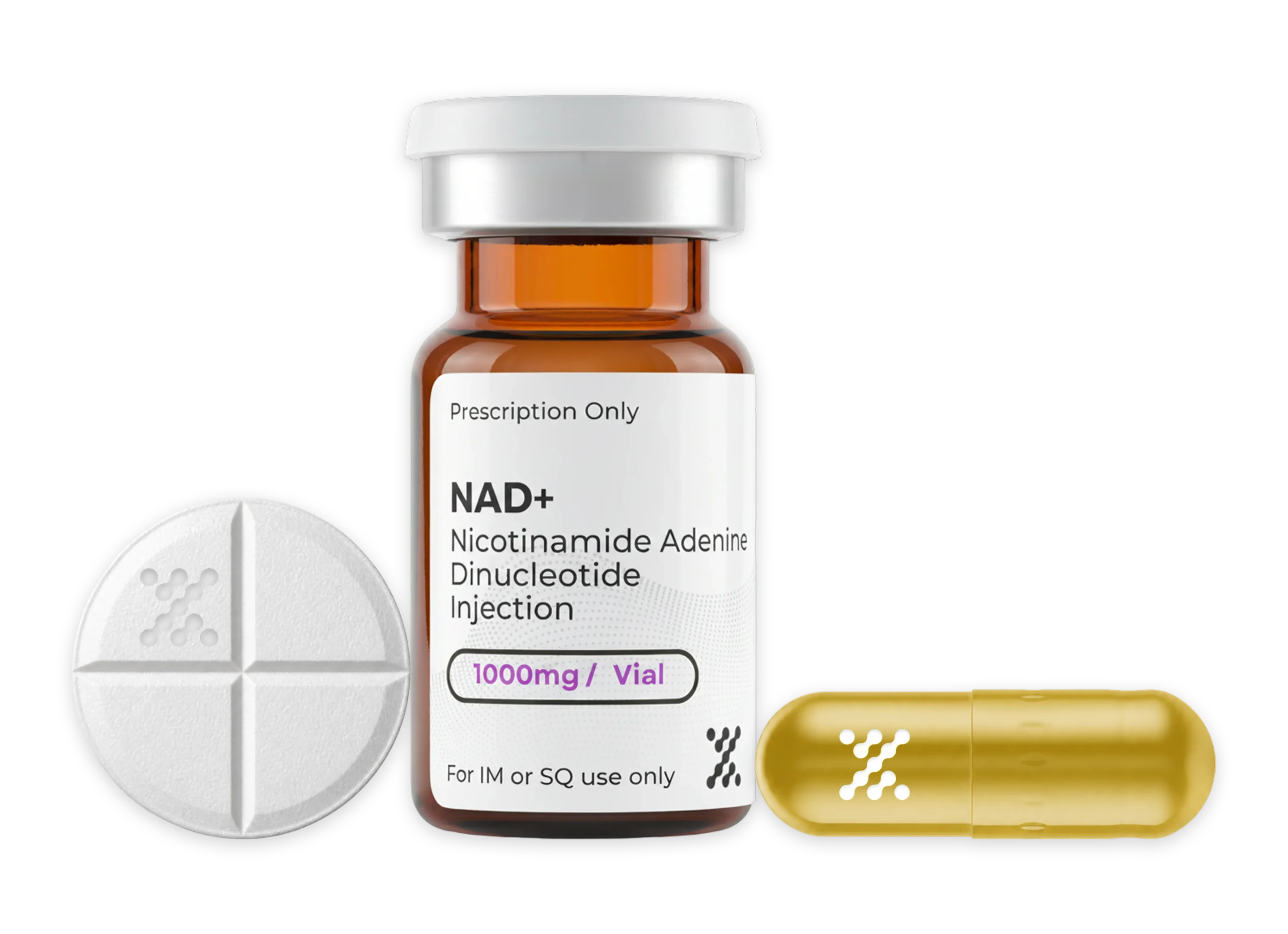
NAD+ (nicotinamide adenine dinucleotide) is a coenzyme present in every cell of the body. It plays a central role in energy production, DNA repair, and the activation of sirtuin proteins that regulate cellular aging. NAD+ levels decline naturally with age, contributing to reduced mitochondrial function, slower recovery, and the progression of age-related conditions. NAD+ therapy restores these levels through direct supplementation, supporting cellular repair and metabolic performance. At REGENX Health, NAD+ injection therapy is prescribed by a board-certified urologist as part of a lab-guided protocol tailored to each patient's health profile and goals.
Benefits of NAD+ Therapy
NAD+ therapy supports a range of physiological functions by restoring the coenzyme levels that drive mitochondrial energy production and cellular repair. Preclinical and early clinical research indicate that raising NAD+ levels has favorable effects on age-related conditions, including metabolic dysfunction, oxidative stress, and impaired mitochondrial function.
- Enhanced cellular energy and ATP production
- Improved recovery from physical exertion and training
- Support for DNA repair and protection against cellular stress
- Reduced systemic inflammation
- Improved vascular health and circulation
- Support for cognitive clarity and neuroprotection
- Anti-aging support through sirtuin activation
- Immune system support
NAD+ Dosage and Formulations
REGENX Health offers NAD+ in multiple formulations to accommodate different treatment goals, dosing preferences, and patient schedules. Your board-certified urologist selects the formulation and dosage based on your lab results and clinical profile.
NAD+ Capsule (35mg)
Oral capsule for daily maintenance dosing. Suitable for patients who prefer a simple daily protocol for ongoing NAD+ support.
NAD+ Flex-Dose Tablet (200mg)
Higher-dose oral tablet for patients requiring a stronger NAD+ protocol or transitioning from injectable to oral maintenance.
NAD+ Vial (Lyophilized, 1000mg)
Reconstituted subcutaneous NAD+ injection. This is the primary formulation for patients on an injectable NAD+ protocol. Subcutaneous administration bypasses first-pass hepatic metabolism, improving bioavailability and onset of action compared to oral dosing. Injectable NAD+ is the most potent and fastest-acting form of NAD+ available.
Risks and Side Effects of NAD+ Therapy
NAD+ therapy is generally well-tolerated with a limited acute toxicity profile based on current clinical evidence. However, as with any therapeutic intervention, there are potential side effects and considerations.
Possible Side Effects:
- Mild nausea or stomach discomfort, particularly with higher oral doses
- Flushing or warmth at the injection site (subcutaneous)
- Temporary fatigue or lightheadedness after initial doses
- High doses of supplemental NAD+ may cause restlessness or sleep disruption in some individuals
Important Considerations:
- Long-term human clinical data for NAD+ supplementation is still limited
- NAD+ therapy should be monitored through lab work, as with any hormone-adjacent intervention
- Patients with active cancer or a history of malignancy should discuss NAD+ therapy with their physician, as NAD+ plays a role in cell proliferation pathways
How Do You Take NAD+
The method of NAD+ administration depends on your treatment goals, schedule, and your urologist's recommendation.
Subcutaneous Injection
Administered at home using a small insulin-type needle into the fatty tissue of the abdomen or thigh. Subcutaneous NAD+ injections are typically dosed 1 to 3 times per week. Best taken in the morning or early afternoon, as some patients report increased energy that may affect sleep if taken late in the day. Injections can be taken on an empty stomach or with food.
Oral (Capsule or Tablet)
Taken daily with water, ideally in the morning. Oral NAD+ is suitable for maintenance protocols or for patients who prefer not to inject. The flex-dose tablet allows for dose adjustments without changing formulations.
IV Infusion
NAD+ IV drips are administered in a clinical setting over 1 to 4 hours depending on the dose. IV delivery achieves the highest peak plasma levels but is the most time-intensive option. REGENX Health can coordinate NAD+ infusion where clinically appropriate.
Who Can Use NAD+ Therapy
- Men experiencing age-related fatigue, reduced energy, or slower recovery
- Men on TRT who want to support mitochondrial function and cellular health alongside testosterone therapy
- Men looking for anti-aging support backed by clinical protocols and lab monitoring
- Men with declining cognitive sharpness or mental clarity
- Active men and athletes looking to optimize recovery and endurance
- Men interested in a physician-supervised NAD+ protocol rather than over-the-counter supplements
Who Should Not Take NAD+
- Patients with active cancer or undergoing cancer treatment (NAD+ influences cell proliferation pathways)
- Patients with uncontrolled metabolic conditions without physician clearance
- Individuals taking medications that may interact with NAD+ metabolic pathways (discuss with your urologist)
- Women who are pregnant or breastfeeding (insufficient safety data)
- Anyone not under the supervision of a licensed physician for NAD+ therapy
What Do You Need to Monitor on NAD+ Therapy
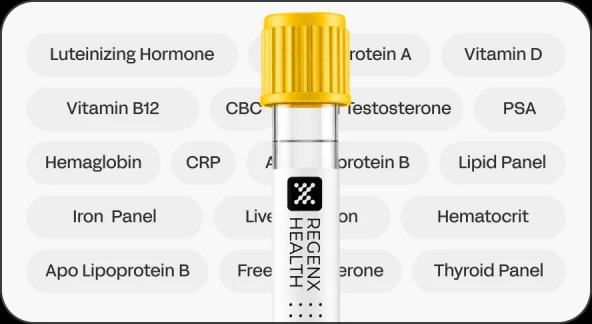
NAD+ therapy at REGENX Health includes lab monitoring to track your response and ensure safety. Key markers your urologist will review:
- Metabolic panel (fasting glucose, insulin, HbA1c) to track metabolic response
- Liver function tests (ALT, AST) to monitor processing of NAD+ supplementation
- Complete blood count (CBC) for baseline health tracking
- IGF-1 levels if NAD+ is stacked with growth hormone peptides
- Kidney function markers (BUN, creatinine) for ongoing safety
Clinical Research on NAD+ Therapy
The following research supports the clinical rationale for NAD+ therapy. All studies are reviewed for relevance by the REGENX Health clinical team.
1. NAD+ therapy in age-related degenerative disorders: a benefit/risk analysis (Braidy & Liu, 2020). Systematic review finding that NAD+ precursors have favorable outcomes on age-related disorders associated with oxidative stress, inflammation, and impaired mitochondrial function, with a limited acute toxicity profile.
2. The Role of NAD+ in Regenerative Medicine (Campbell, 2022). Reviews NAD+ restoration and its effects on cardiovascular function, muscle endurance, mitochondrial output, and organ protection.
3. Clinical Evidence for Targeting NAD Therapeutically (Radenkovic et al., 2020). Systematic review of randomized clinical trials assessing NAD+ supplementation across metabolic and age-related conditions. Concludes NAD+ pharmacology is a promising treatment class with a favorable side effect profile.
4. Therapeutic potential of NAD-boosting molecules: the in vivo evidence (Rajman et al., 2018). Review of NAD+ boosters in animal models and early human trials, demonstrating benefits for metabolic health, muscle function, and age-related decline.
5. Evaluation of safety and effectiveness of NAD in different clinical conditions (2024). Systematic review of randomized clinical trials. Concludes NAD is safe with low incidence of side effects and shows promise for treating age-related conditions.
Frequently Asked Questions About NAD+ Therapy
What is NAD+ therapy?
NAD+ therapy is a treatment that restores levels of nicotinamide adenine dinucleotide, a coenzyme essential for cellular energy production, DNA repair, and metabolic function. NAD+ levels decline naturally with age, and supplementation through injections, oral capsules, or IV infusion can help restore them to support overall health and performance.
What are the benefits of NAD+ injections?
NAD+ injections support enhanced cellular energy, faster recovery from training, reduced inflammation, and improved cognitive clarity. Subcutaneous NAD+ injections offer higher bioavailability than oral supplementation because they bypass first-pass liver metabolism.
How is NAD+ therapy administered?
NAD+ can be administered as a subcutaneous injection at home, as an oral capsule or tablet taken daily, or as an IV drip in a clinical setting. At REGENX Health, your board-certified urologist recommends the method based on your lab results, treatment goals, and lifestyle.
What is the difference between NAD+ injections and NAD+ IV drips?
Subcutaneous NAD+ injections are self-administered at home and take seconds. NAD+ IV drips are administered in a clinical setting over 1 to 4 hours and achieve higher peak plasma levels in a single session. Injections are more practical for ongoing protocols, while IV infusions may be used for initial loading doses or acute needs.
Do I need a prescription for NAD+ therapy?
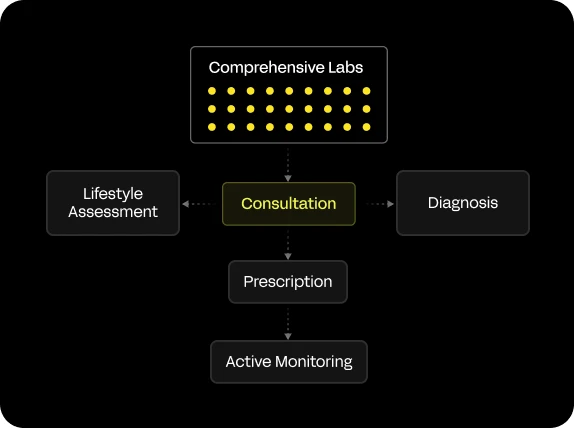
At REGENX Health, yes. NAD+ is prescribed by a board-certified urologist after reviewing your lab results and health history. This ensures the formulation, dosage, and monitoring schedule are appropriate for your individual profile. Over-the-counter NAD+ supplements do not require a prescription but are not monitored or dosed by a physician.
What is the typical NAD+ dosage?
NAD+ dosage varies by formulation and patient needs. Oral capsules are typically 35mg daily for maintenance. Flex-dose tablets are available at 200mg for higher-dose oral protocols. Injectable NAD+ vials (1000mg) are reconstituted and dosed by your urologist, typically 1 to 3 subcutaneous injections per week. Your dosage is adjusted based on lab monitoring and clinical response.
Can NAD+ therapy be combined with TRT or peptide therapy?
Yes. NAD+ is commonly added with testosterone replacement therapy and growth hormone peptides at REGENX Health. NAD+ supports mitochondrial function and cellular energy, complementing the muscle-building and recovery benefits of TRT and the GH-optimization effects of peptides like Sermorelin or CJC-1295. Your urologist manages each component independently based on lab data.
Is NAD+ therapy safe?
Current clinical evidence indicates that NAD+ therapy has a favorable safety profile with limited acute toxicity. Common side effects are mild and may include nausea, flushing at the injection site, or temporary fatigue. Patients with active cancer should discuss NAD+ therapy with their physician before starting, as NAD+ plays a role in cell proliferation pathways. REGENX Health monitors all patients through regular lab work.
How quickly does NAD+ therapy work?
Many patients report improved energy and mental clarity within the first 1 to 2 weeks of starting NAD+ therapy. Changes in recovery time, sleep quality, and inflammation markers typically become measurable over 4 to 8 weeks. Results vary based on the formulation used, starting NAD+ levels, and overall health.
Where can I get NAD+ therapy near me?
REGENX Health provides NAD+ therapy online to patients across the United States. Your consultation, lab review, and prescription are all managed through secure telehealth with a board-certified urologist. Medications are shipped directly to your door. There is no need to visit a physical clinic for NAD+ injections or oral protocols.